At a glance
Indication
Sickle cell disease
Approach
Autologous ex vivo gene correction using homology-directed repair
Editing strategy
Correction of the sickle-causing mutation at the native HBB locus
Treatment model
A single infusion of a patient’s corrected blood stem cells following conditioning
Clinical stage
Phase 1/2
Clinical study
RESTORE | NCT04819841
Clinical design
Open-label study of the safety and efficacy of nula-cel in patients with severe SCD
FDA designations
Fast Track and Orphan Drug
True gene correction
Restore the native HBB sequence
Nula-cel uses homology-directed repair to correct the disease-causing HBB sequence from GTG to GAG at its native genomic locus. The corrected gene remains under natural regulatory control, with the aim of increasing adult hemoglobin production and targeting sickle hemoglobin at its genetic source.
The engineering challenge
Making correction work
in long-lived HSCs
Long-term HSCs are largely quiescent and naturally favor non-homologous end joining. Kamau engineers the process around this biology, balancing targeted repair with the cell quality required for engraftment, self-renewal, and multilineage function.
How it works
From a patient’s cells to a precisely corrected medicine
01
Collect
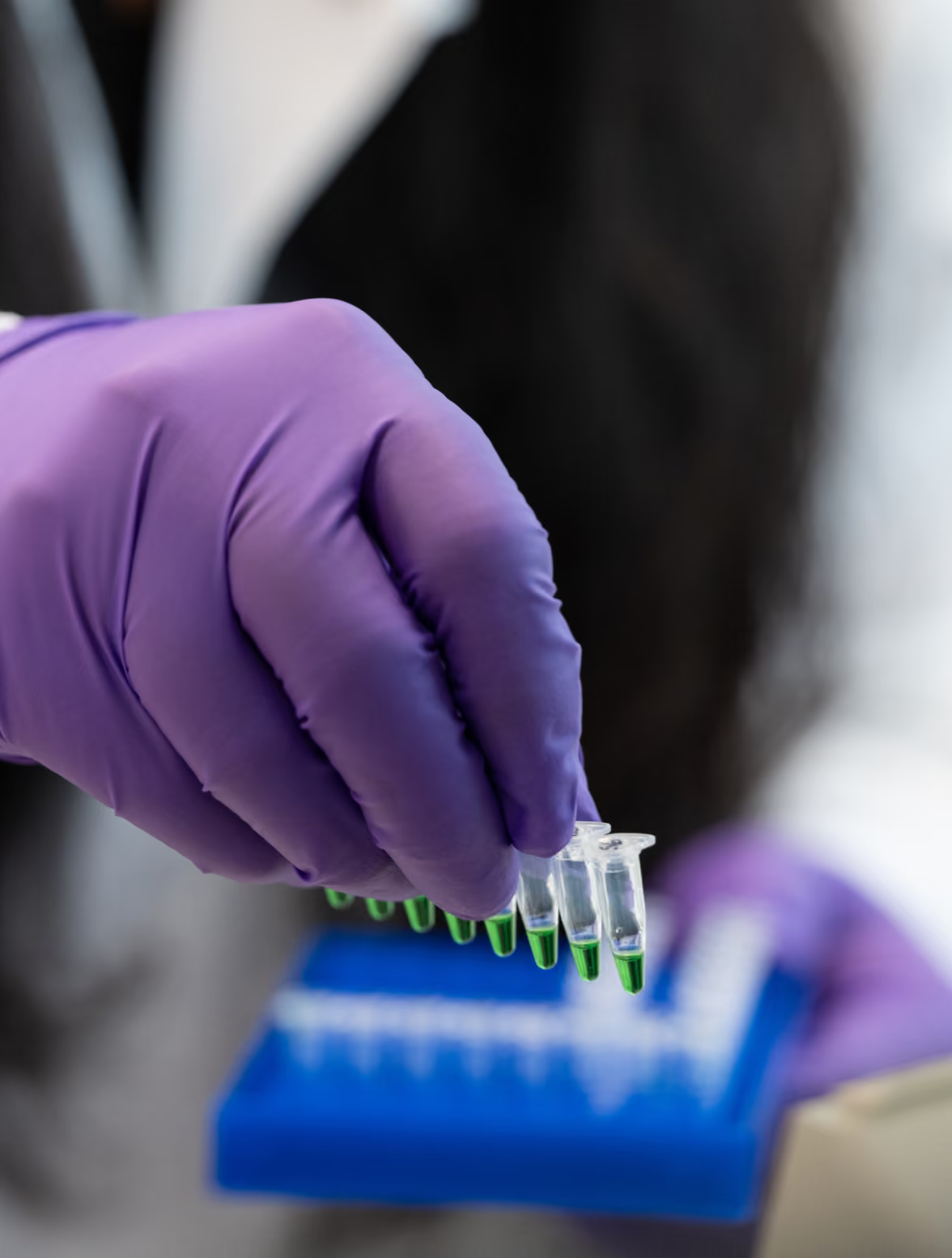
A patient’s own CD34+ hematopoietic stem and progenitor cells are collected through apheresis following mobilization.
02
Correct
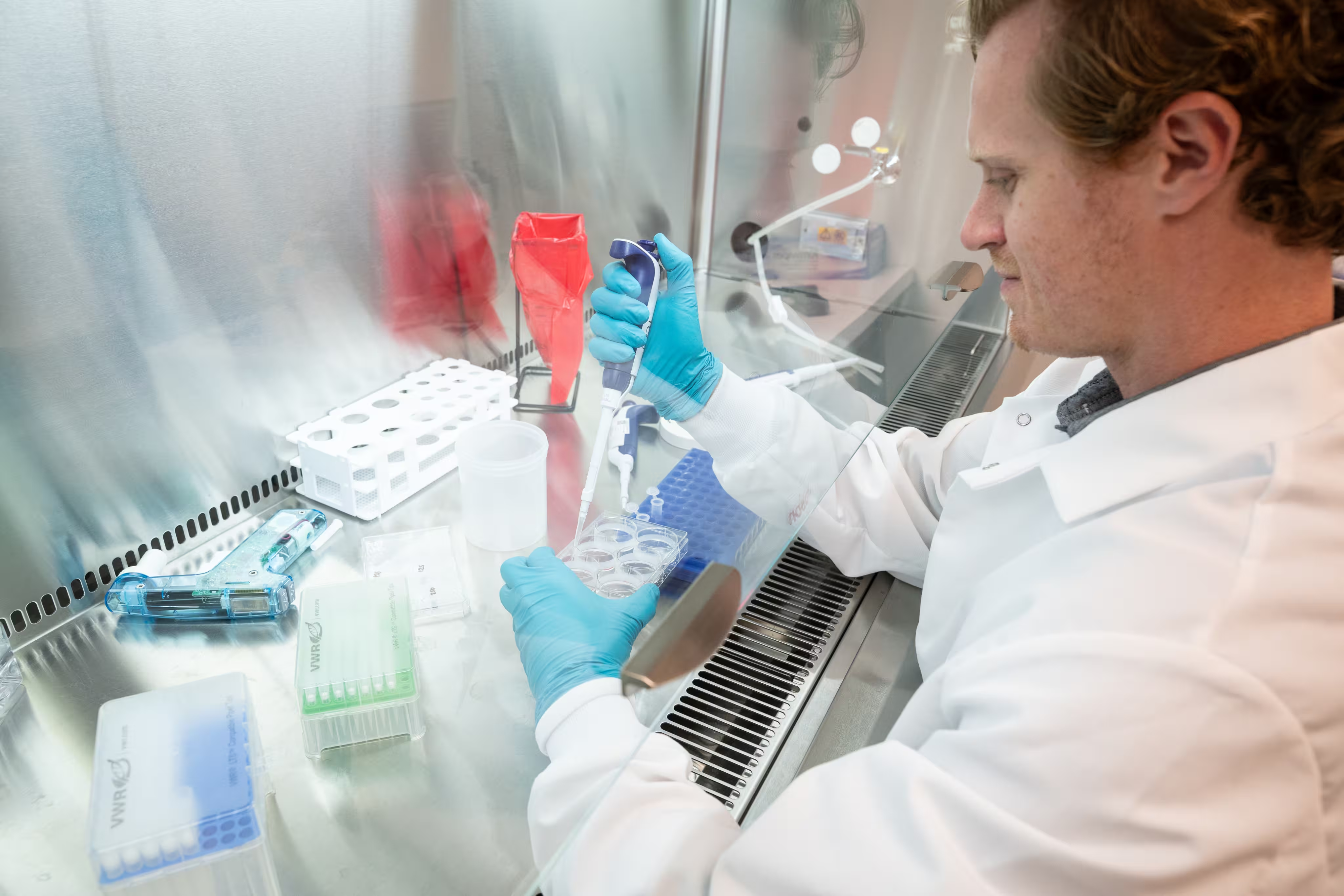
A high-fidelity Cas9 ribonucleoprotein and AAV6 donor template direct correction of the sickle-causing mutation through homology-directed repair.
03
Characterize
Each batch is tested for identity, purity, potency, quality, and safety against defined release specifications.
04
Infuse
Following conditioning, the corrected cells are returned to the patient through a single infusion.
05
Engraft
The corrected cells are designed to engraft in the bone marrow and produce red blood cells containing adult hemoglobin.
History
The pursuit of a cure
Nula-cel is the product of years spent translating precise gene correction from foundational science into a reproducible clinical process. Each cycle of research, process development, manufacturing, and clinical development has strengthened the program and deepened the capabilities required to advance it.